DePaul IMPACT 2025: The All-Imagining
A concise virtual experience designed to convey the costs of generative AI overuse.

What is the All-Imagining?
This project was made as part of DePaul’s 2025 IMPACT program, following a sponsored prompt provided by Code Your Dreams. The goal of the project was to create an experience that conveys the environmental costs of generative AI.
What role(s) did I serve on the project?
The All-Imagining was made by a four-person team, of which I was the primary designer for the gameplay, the game’s appearance, and its functions. I also made some of the visual assets depicted in the above screenshot (specifically the base and the trees), as well as all sound effects present in the game.
The gameplay of The All-Imagining
In the game, you ask questions to a mechanical oracle who answers them, but absorbs natural resources from the surrounding area to do so. The forest gradually degrades until there’s nothing left.
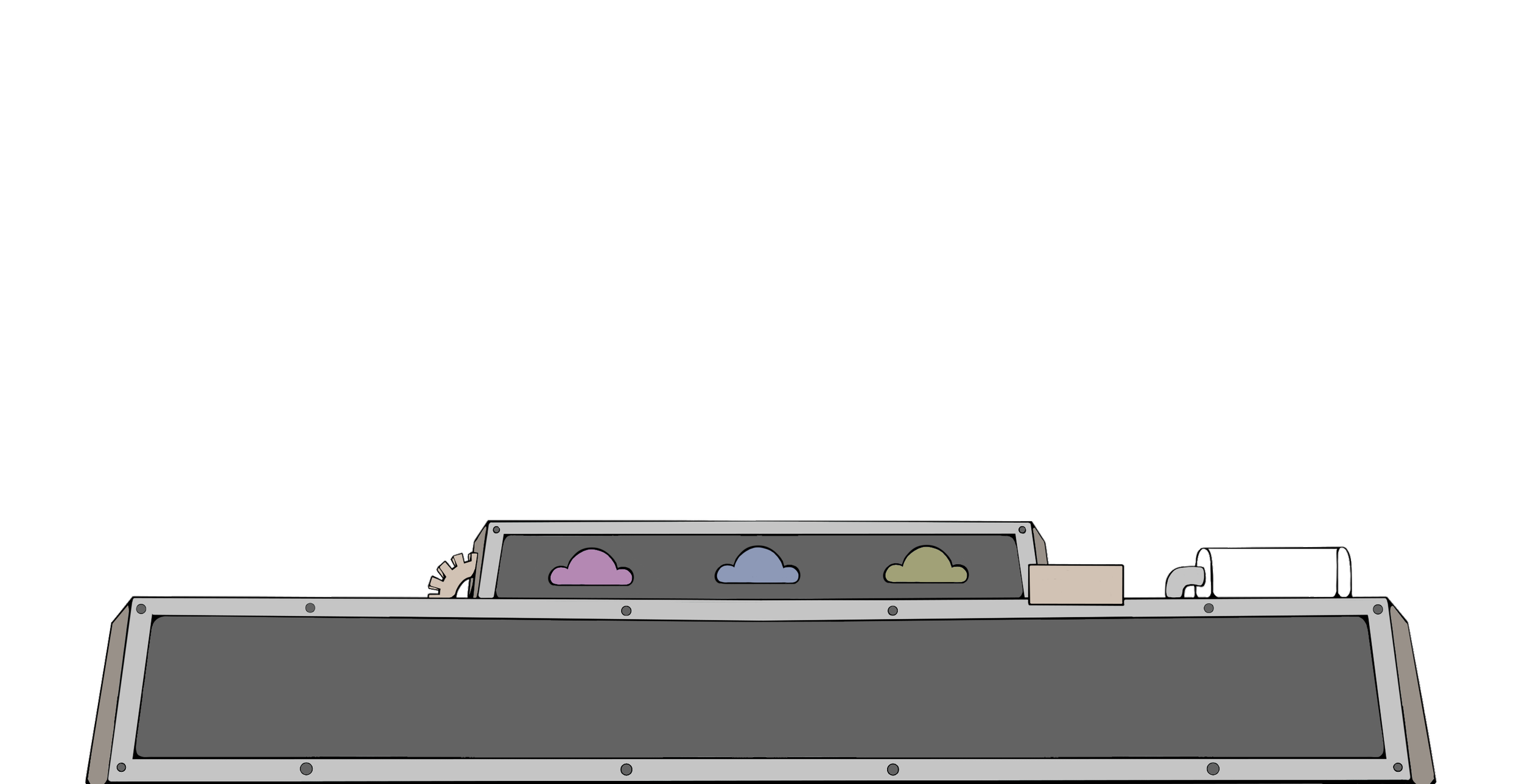
Users form questions by dragging the colored clouds containing question fragments into their corresponding slots. This gives the player freedom over what they ask while also constraining their potential questions enough that we could make sure we had an answer for everything, all while also serving as a form of prompting.
The design philosophy of The All-Imagining
One of the main guidelines I set for the team during this project was to try to create an experience that simulated asking questions to an AI without actually using an AI program. It felt disingenuous, after all, to try to create an informational experience about the environmental costs of AI overuse while actively contributing towards them. As such, every response to the over 80 possible questions one can ask to the AI were manually written and hard-coded in by me.
Since the project was intended to be used in a public space like an exhibit or showcase, we added features that were designed for such a purpose. The program has a built-in self-reset if it is not interacted with for a while in order to make the transition from one player to the next as smooth as possible. The game is intentionally made to be very accessible, playable with either a touchscreen or just a mouse with simple controls and mechanics. Finally, the game is quite short, with the player only being able to ask about ten questions before the forest is depleted and the program resets, as there are many other things competing for an exhibit-goer’s time and attention.
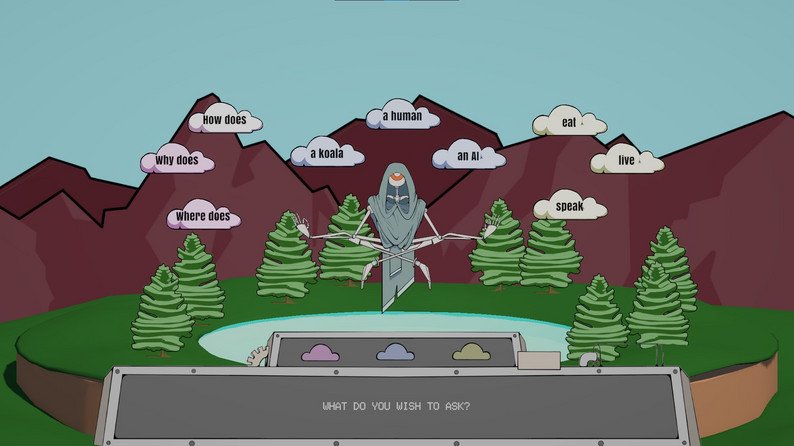
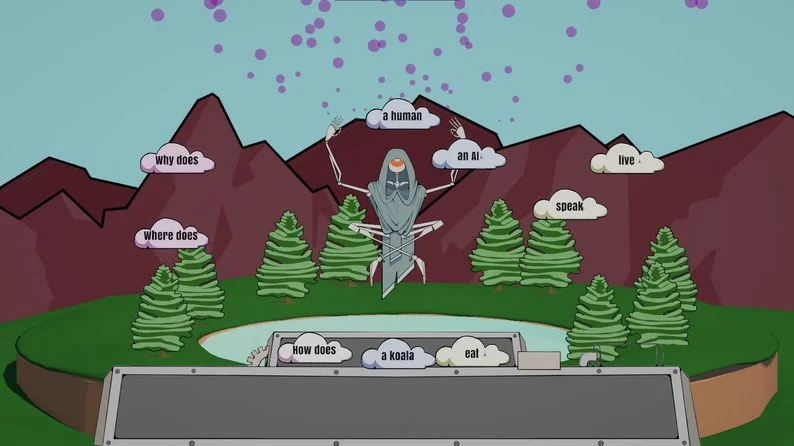
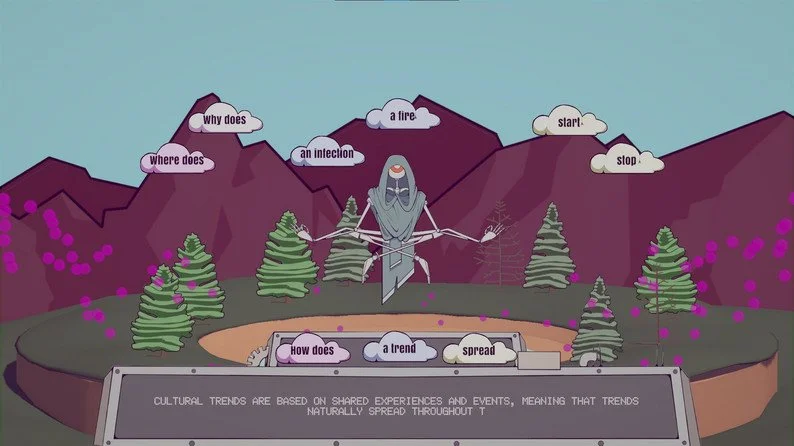
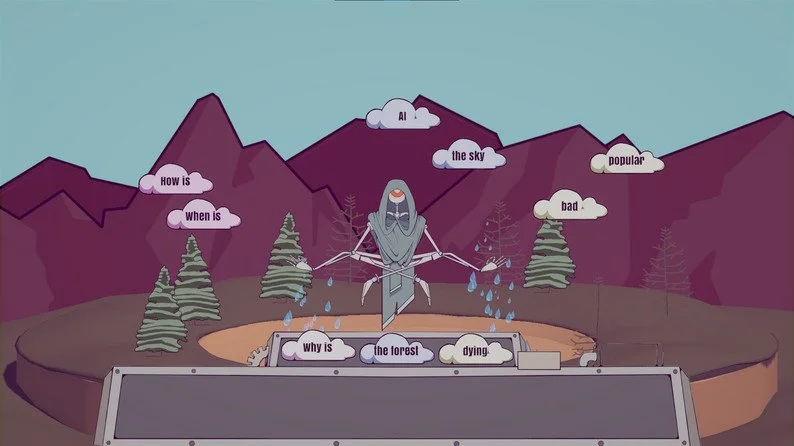
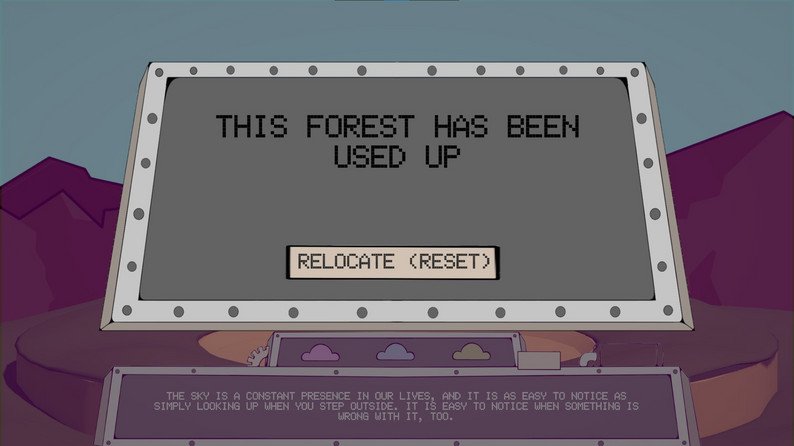
Example of the oracle answering a question, as well as the environment’s degradation over time